OPT Job Market 2025: Top Trends & Smart Tips Every International Student in the USA Must Know
INTRODUCTION
In the past few years, the OPT job market has undergone a dynamic transformation in the wake of the pandemic. Indeed, we have witnessed considerable changes in the trends of hiring, with more focus on remote work, digital competencies, and certain industry requirements. This change has opened opportunities as well as challenges for international students going through the OPT process and has influenced hiring patterns.
In this article, we delve deep into the latest OPT job market trends, the challenges faced by job seekers, and essential tips and strategies for international students.
CURRENT OPT JOB MARKET TRENDS
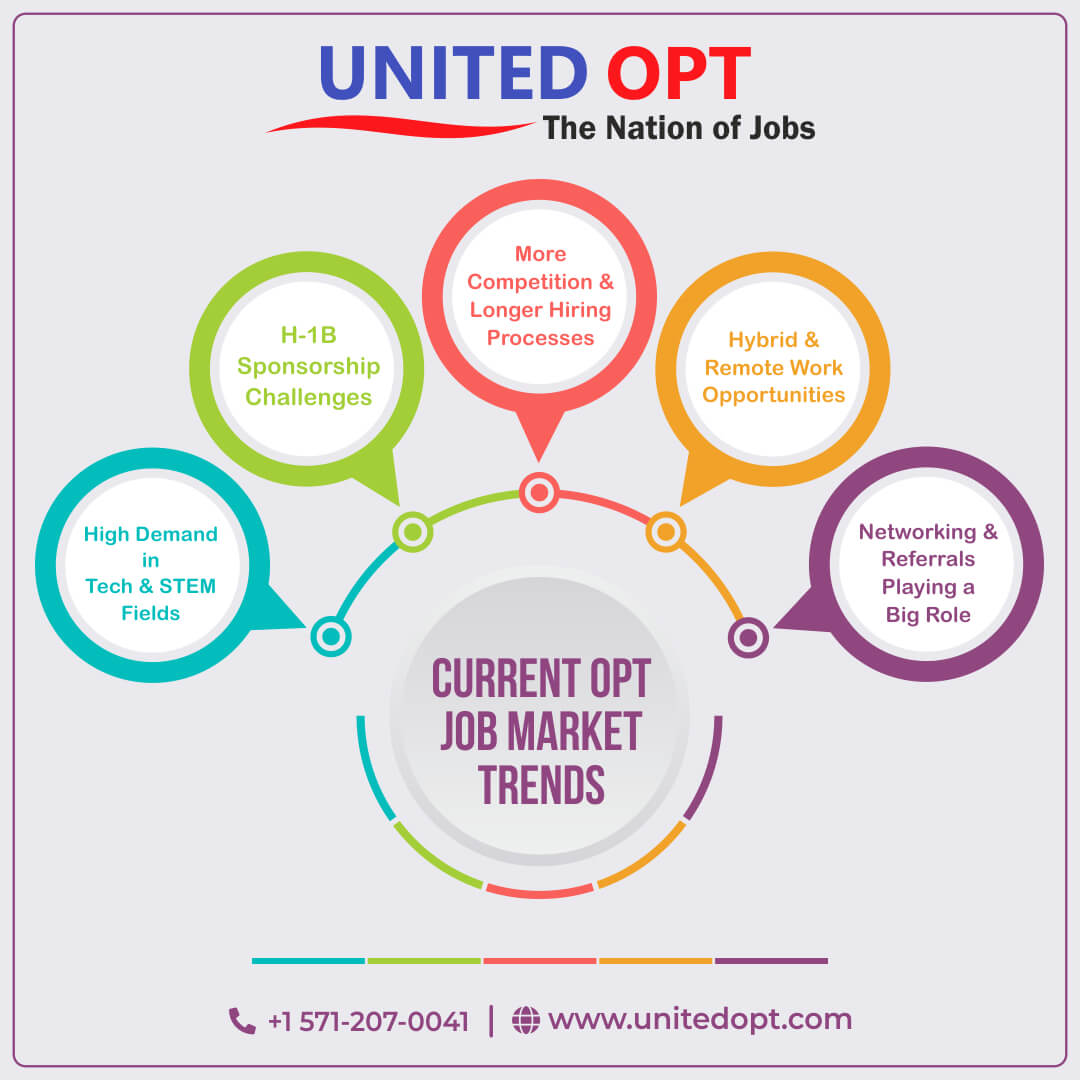
The OPT job market is undergoing a major transformation, requiring international students to be flexible and strategic. Here are the major trends in the OPT job market:
-
High Demand in Tech & STEM Fields
The Tech & STEM fields have been dominating the OPT job market, driven by sustained growth in these industries. The need for specialized talent arises from the increased focus on innovation and digital evolution. OPT candidates possessing specialized skills and experience are likely to be hired for these roles, as they are highly sought after.
-
H-1B Sponsorship Challenges
Securing H-1B visa sponsorship has become increasingly difficult in the current OPT job market. The change in immigration policies and the introduction of strict regulations have created impediments for OPT candidates seeking to establish a career in the U.S. The entire H-1B visa sponsorship process is costly and comes with uncertainty due to the lottery system; however, this may make employers hesitant to hire OPT graduates. International students should target companies with a history of hiring OPT candidates and sponsoring H-1B visas, as this increases their chances of being hired.
-
More Competition & Longer Hiring Processes
Competition in the OPT job market has increased as more OPT graduates enter the workforce. As a result, employers become highly selective, seeking candidates with strong experience, skills, internships, and certifications. The hiring timeline and process have become longer due to the large applicant pool and the need for recruiters to carefully evaluate and decide who to hire.
-
Hybrid & Remote Work Opportunities
With the recent rise in hybrid and remote work opportunities, OPT students from different locations have significantly benefited. This is an advantage to students located in areas with less job opportunities. A hybrid working arrangement makes work flexible for job seekers, allowing them to alternate between working from home and coming to the office.
-
Networking & Referrals Playing a Big Role
Networking has always been key to landing a job, with referrals being the top way positions are being filled. International students should have a strategized networking plan like leveraging LinkedIn, alumni networks, career fairs and professional events to build connections. You can also build strong relationships with professors and industry professionals.
ESSENTIAL TIPS FOR INTERNATIONAL STUDENTS
The OPT job market has been currently challenging for international students, however one should be strategic by following these ways:
-
Start Your Job Search Early
Starting your job search journey as early as three to six months before your OPT starts can increase your chances of securing a job on time. Currently the hiring process is prolonged, therefore if you begin early, you are assured not to miss most opportunities. This allows you to look for the best known OPT companies, interview preparation and create strong applications.
-
Networking
This has been an effective way in securing a job as an OPT graduate in the current OPT job market. Referrals are also a great pathway in securing hidden job opportunities.
You can effectively network as follows:
- Join professional organizations.
- Participate in career fairs and industry events held by your university.
- Associate with professionals in your industry.
- Engage yourself in informational interviews.
-
Pursue known STEM OPT employers
Focus on companies that frequently hire OPT candidates and have a history of actively sponsoring international employees. Explore industries and employers in STEM fields. You should highlight relevant roles and in-demand technical skills on your resume and portfolio to stand out to employers.
-
Stay Informed About Immigration Regulations
Always stay up to date with the latest U.S immigration policies, OPT rules and H1B visa requirements. Knowing about policy changes will help you make better decisions regarding future visa options. Monitor OPT deadlines and stay informed about work authorization requirements. Consult with your District School Official (DSO) or immigration attorney for reliable immigration information.
CONCLUSION
The OPT job economy is changing, and international students need to be well-informed, proactive, and strategic. Although the tech and STEM job prospects continue to be strong, the fluctuations of H-1B sponsorship challenges and rising competition necessitate early preparation and networking. Taking advantage of hybrid work opportunities, focusing on OPT-friendly employers, and remaining aware of immigration policies can all go a long way towards enhancing job prospects. By taking the proper strategy, beginning early, networking well, and targeting in-demand skills, foreign students can successfully navigate the OPT job market and enhance their prospects of gaining long-term career opportunities in the U.S.
For any assistance in OPT job search services, kindly visit our UINTED OPT website.
FAQ’s
1. WHAT IS THE JOB MARKET SITUATION LIKE FOR OPT CANDIDATES TODAY?
The OPT job market for international students has been quite competitive but it has great opportunity in industries like STEM, healthcare, finance and engineering. The hiring trends in the job market tend to change depending on the economic conditions, immigration policies, visa regulations and employer preferences.
2. HOW DOES THE ECONOMY AFFECT THE OPT JOB MARKET?
The economy significantly impacts the OPT job market. For instance, if the economy slows down, so does the hiring process, the willingness to sponsor, and the competitiveness of the job market increases. When the economy is blooming so does the hiring process, job availability and sponsorship opportunities.
3. HOW BEST CAN I PRESENT MY INTERNATIONAL EXPERIENCE TO PROSPECTIVE EMPLOYERS?
Emphasize your personal perspective, cultural flexibility, and language abilities you have. Make your achievements numeric and compare them with the demands of the job.
4. ARE THERE ANY PARTICULAR SALARY CONSIDERATIONS FOR STEM OPT POSITIONS?
There are no strict minimum wages for STEM OPT jobs as there are for H-1B visa recipients. Employers are, however, required to pay wages that are commensurate with wages paid to similarly placed U.S. employees. The work must also be commensurate with the student's degree, and employers are required to adhere to STEM OPT training plan (Form I-983) regulations. OPT jobs could get paid less than full-time employees from some companies because of visa uncertainty.
5. WHAT ARE THE ALTERNATIVES IF I FAIL TO SECURE MY JOB WITHIN THE OPT PERIOD?
If you fail to secure a job within the OPT period, you may consider the following alternatives:
- Enrolling in a new degree program to maintain F-1 status.
- Applying for a STEM OPT extension if eligible.
- Exploring volunteer or unpaid internships related to your field (check with your DSO for compliance).
- Seeking opportunities outside the U.S. in countries with strong demand for your skills.
6. WHAT SHOULD I SEEK IN AN EMPLOYER AS AN OPT CANDIDATE?
When looking for an employer, you should seek the following:
- Willingness to sponsor H-1B in the future.
- Compliance with OPT regulations.
- A history of hiring international students.
- Stability and growth opportunities within the company.
7. ARE YOU ALLOWED TO WORK REMOTELY FOR A U.S COMPANY WHILE ON OPT?
Yes, you can work remotely for a U.S.-based employer on OPT, provided the employment is directly related to your field of study and in accordance with OPT rules. Working for a foreign employer or outside the U.S. might not be considered valid OPT employment.
Clara Michael
Clara Michael is a Career Counsellor and Legal advisor at United OPT. she has very good working experience with OPT, CPT and H1B candidates. She has a vast knowledge of recruitment and immigration laws. Through her experience and knowledge, she is giving her best to support the international student community in the USA. Do share the article if you like it.